

How To End The Food Waste Fiasco | Rob Greenfield | TEDxTeen
“My name is Rob Greenfield, and I am a dumpster diver. Now, at first that might sound a little bit crazy. Maybe even a little bit gross. But there’s actually a very important message at the bottom of these dumpsters. You see I’m an adventurer, an activist, on an mission to effect positive change on Earth, and I tend to go about it in some pretty interesting ways.”
– Rob Greenfield, 2016 TEDxTeen #Untapped Speaker
Rob Greenfield brings a whole new meaning to dumpster diving. He brings purpose and awareness to findings within the dumpster. Cycling across the country taught Rob how to live an environmentally friendly life. Within one hundred and forty days of riding, he had used only 260 gallons of water creating two pounds of trash. While teaching himself how to live this considerably ‘environmentally friendly life,’ he embarked on a personal journey of ultimate water conservation. He did not shower for one thousand days.
He reassured us that bathing took place in nature bodies of water – lakes, rivers, and even through use of a New York fire hydrant. Through this bold statement, he brought awareness to others about the significant daily amounts of water wasted. He understood that simplicity equaled freedom. A statement by which we can all learn from. He simplified his living situation by ridding himself from the debts and bills of regular housing arrangements in San Diego. Later, purposely forcing himself out of his own comfort zone, led to appreciating the beauty of South America.
Before our eyes, Rob ate a banana he had retrieved from one of the dumpsters in London, the previous night. This journey had begun with investigating the backs of grocery stores. He would be astonished by the decent looking and tasting fruits, vegetables, and other foods found within the dumpsters of these grocery stores. He quickly realizes that hundreds of families could be fed by these disregarded foods. He researched further into the numerical amounts of food waste in the United States. The exact amount was $165 billion dollars worth of food wasted every year.
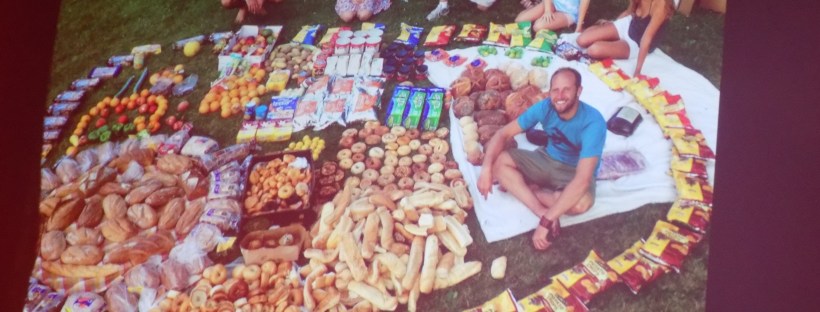
Publicly displaying the food waste had exhibited ‘the world’s food waste fiasco.’ The visual representation of the varying fruits, vegetables, and other foods indicated the significance of just how much food is wasted. The public health advocate inside of me was screaming. There was no better time for Rob to share his story than right now. Especially, concerning the food insecurity that several Americans face – unsure of the whereabouts of the next meal they might receive. These perfectly good foods could have feed the American population twice over. Food insecurity deals with everyone. Because it effects everyone. Food insecurity ‘is the state of being without reliable access to a sufficient quantity of affordable, nutritious food.’ How is it that America produces twice the amount of food necessary, but wastes half of it?
Rob had informed us of the simple concept: reduce, reuse, and recycle to end the ‘world’s food waste fiasco.’ The excess food simply needs to be reduced in the first place. Then, the fruits and vegetables should be re-purposed within the stores. For example, he suggested that slightly ripe fruits can be made into juices. The recycling deals with feeding the food to animals or as a last resource, composting. His ultimate message is: not to put food in the dumpsters in the first place.
Photography and Images captured by a Nikon Coolpix L340
© Damaris Kyem
 The Orchid Initiative